How Do I Turn Clip Art Into a Background
And then, you just scanned or took a film of your hand-drawn line art with your smartphone and, you go to color information technology to detect that it only doesn't look as set to color as the original. At times like these, it's best to excerpt your line work and convert it into something more suited for digital coloring. You can do this by using the Convert Brightness to Opacity function in Clip Studio Paint and SAI or the Alpha Channel role in Photoshop.
Adjusting the Image Color
Using our graphics software of choice, nosotros'll brainstorm by opening the scanned or photo image of our analogy.
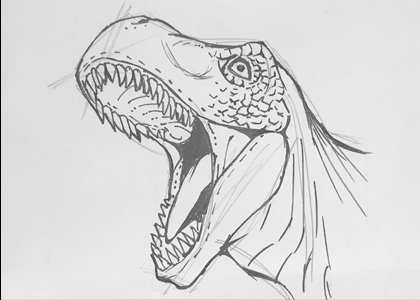
Even though the original image is black lines on white paper, the imported prototype ends up with either a grayness tone to information technology, or the lines aren't as stiff every bit in the original. To ready this result, we will adjust the image so that the background is completely white and the lines are solid and clear. The method nosotros will use to reach this depends on the graphics software we want to use.
Photoshop & Clip Studio Paint
Starting time, we'll suit the color using an aligning layer (Tonal Correction layer).
● Brightness/Contrast
Use Brightness/Contrast to burnish the overall image.
In Photoshop:
Layer menu > New Adjustment Layer > Brightness/Contrast
In Clip Studio Paint:
Layer menu > New Correction Layer > Brightness/Contrast
From the displayed carte, apply the Effulgence slider to make the paper background equally white as possible without losing too much line art detail.
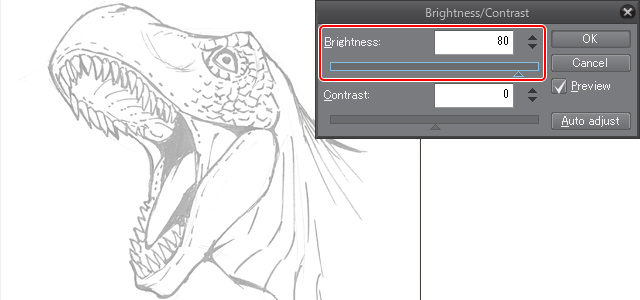
● Level Correction
Adjacent, employ Level Correction to make the lines more singled-out.
In Photoshop:
Layer menu > New Aligning Layer > Levels
In Prune Studio Paint:
Layer card > New Correction Layer > Level Correction
From the displayed menu, operate the triangle nodes at the bottom of the graph by dragging them correct or left as needed. This allows you to whiten the colour and shadows of the paper, as well as thicken and darken the line work.
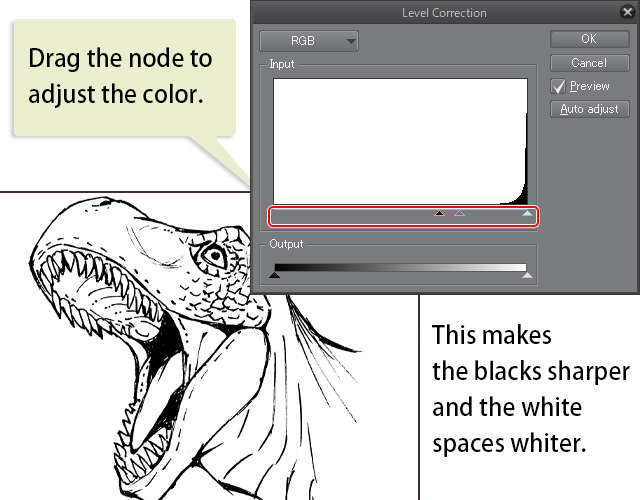
Once complete, the adjustments will be created in the form of an adjustment layer (Tonal Correction layer). If you lot aren't quite satisfied with the results, double click the adjustment layer icon to display the menu once again and readjust your settings.
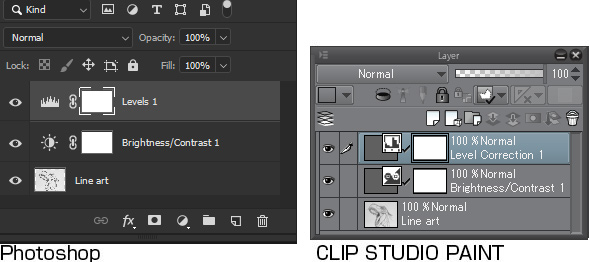
Lastly, select the Layer carte du jour > Flatten prototype and the line art layer will merge with the adjustment layer (Tonal Correction layer).
Just in case, I recommend saving your file one time before merging.
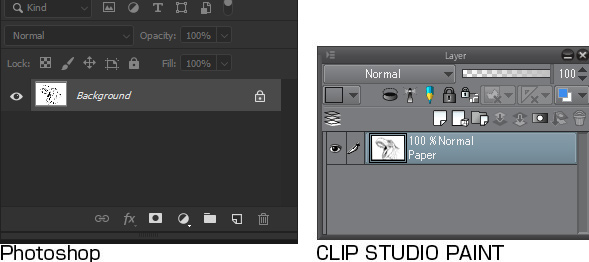
Adjusting the Image Color: Paint Tool SAI
For SAI, select and gear up the Filter card > Brightness/Contrast settings.
In the Effulgence and Contrast dialog, adjust the Brightness slider so that the paper appears white. Brand sure that thin lines practice not disappear or become too thin while adjusting. Once satisfied, click OK.
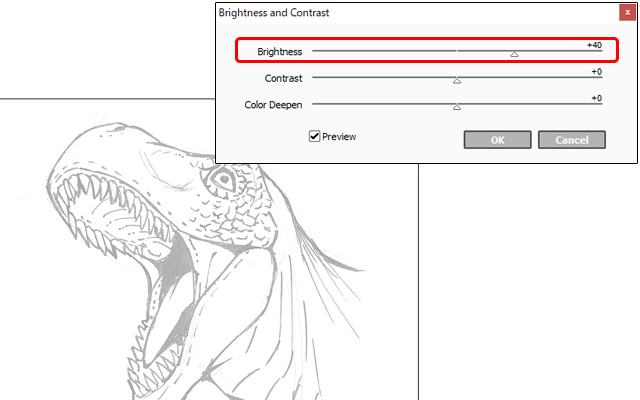
Select the [Filter] menu > [Brightness/Dissimilarity] again.
This time, adjust the [Contrast] and [Brightness] sliders to darken the lines. Take care that lines don't get too thick or extend past your original line work.
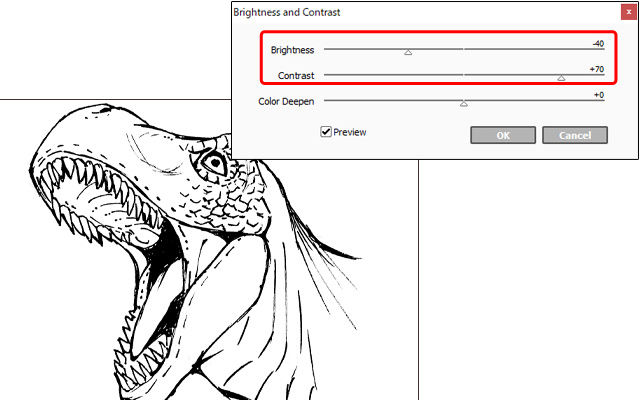
Completing the color adjustments
Compared to the original prototype, we have created much nicer looking line fine art, dark lines on a white groundwork.
In order to make the coloring pace become more than easily, we will "excerpt" the line work by transforming the white background into a transparent groundwork.
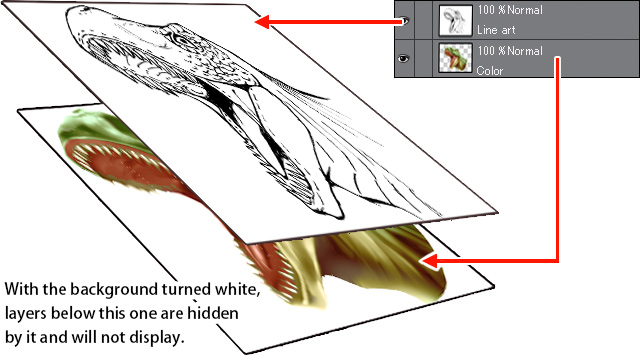
Extracting Line Art: Clip Studio Paint & SAI
Nosotros volition turn the white transparent by using "convert brightness to opacity." Select the following commands to exercise this.
Clip Studio Paint:
Edit menu > Convert brightness to opacity
SAI:
Layer menu > Luminance to Transparency
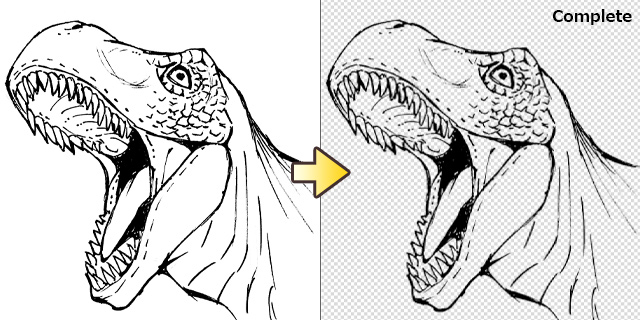
With this, the line art has been extracted!
Note:
After using Clip Studio Paint's Convert brightness to opacity, a transparent checkered pattern will appear.
Select the Layer card > New Layer > Paper to create a new paper layer over the transparent blueprint.
Extracting Line Art: Photoshop
Using Alpha Channel, we volition turn the white transparent.
The Alpha Aqueduct part tin can extract transparency, uses selections as a mask for editing, and has a saving power.
Note: The Alpha Channel feature cannot be used in Photoshop Elements.
● Cut the line fine art
Let's cut the line art from the canvas.
(one) Select the Selection menu > All
(2) Select the Edit menu > Cut
● Creating an Alpha Channel
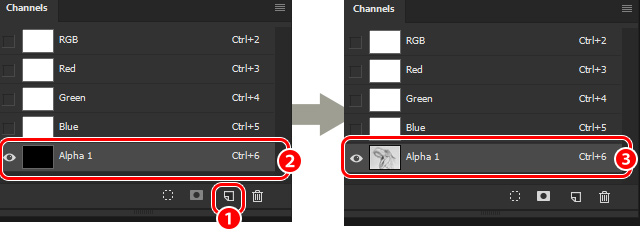
Select the Window menu > Channels to display and create an Alpha Channel.
(i) Click Create New Aqueduct from the Channels console
(2) Select the created Alpha Channel
(iii) Select the Edit menu > Paste to paste the line art to the Alpha Channel.
● Creating a selection
Allow's at present create a option based on the opacity and line thickness.
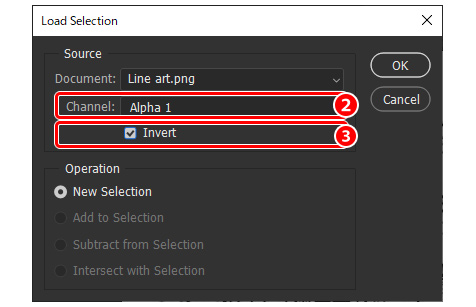
(1) Select the Selection menu > Load Selection
(2) Select the Alpha Channel we used earlier from Channels
(three) Check Invert and click OK
● Creating line art
Side by side, we'll make a new layer based on the line art.
(ane) Create a new layer past selecting Create a New Layer from the Layer panel
(2) A canvas with the dimensions of the selected expanse will appear
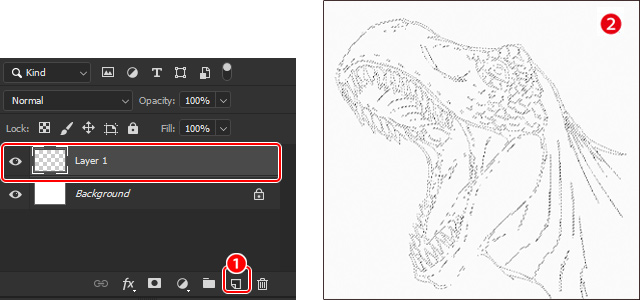
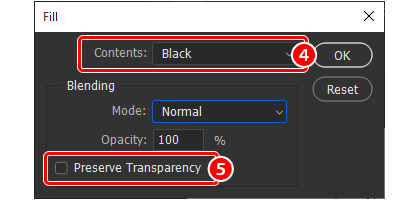
(3) Select the Edit menu > Fill up
(4) Select a color to fill from Contents
(five) Uncheck the Preserve Transparency option and click OK
With this, the line art has been extracted!
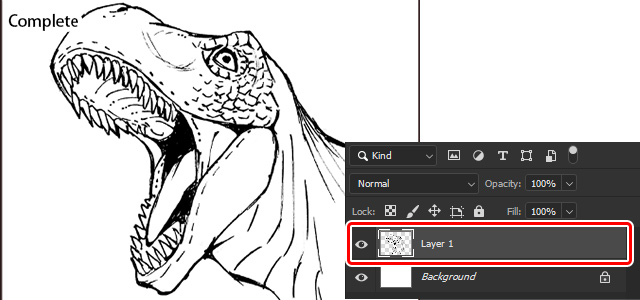
The Line Art is Now Ready!
With this finished line fine art, you can add colored layers underneath the line fine art without erasing the lines.
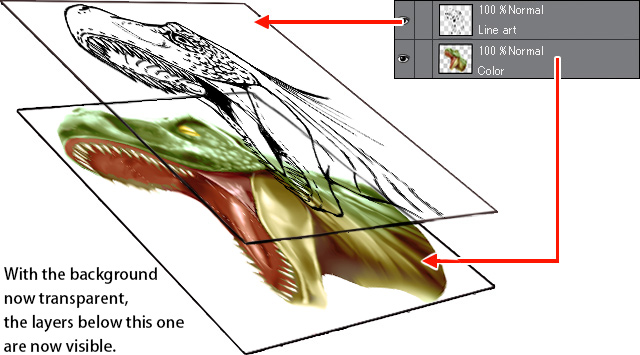
Source: https://www.clipstudio.net/how-to-draw/archives/154453
0 Response to "How Do I Turn Clip Art Into a Background"
Post a Comment